

7 Risks of DIY Commercial Equipment Maintenance
Table of Contents
- 7 Risks of DIY Commercial Equipment Maintenance
- 1. Voiding Manufacturer Warranties
- 2. Risk of Personal Injury or Electrocution
- 3. Potential for Further Equipment Damage
- 4. Lack of Specialized Tools and Diagnostic Equipment
- 5. Complexity of Modern Commercial Systems
- Cost of Commercial Equipment Downtime
- 6. Insurance Liability and Claim Denial
- 7. Compliance and Health Code Violations
- Why Professional Service Matters
- Frequently Asked Questions
Last Updated: September 20, 2026
7 Risks of DIY Commercial Equipment Maintenance
Attempting DIY commercial equipment maintenance might seem like a way to save money, but the risks often far outweigh short-term savings. At EESi Service, we've spent over 20 years watching businesses struggle with the fallout from DIY attempts on commercial kitchen equipment. What starts as a cost-cutting measure frequently ends in emergency calls, regulatory violations, and equipment replacement bills that dwarf professional service costs.
This guide covers the seven most serious risks of DIY commercial equipment maintenance, from warranty voidance to catastrophic safety hazards. Understanding these dangers helps you make the right choice for your operation.
| Risk | Impact | Prevention |
|---|---|---|
| Voided manufacturer warranty | Equipment repairs become your expense | Hire certified technicians only |
| Personal injury or electrocution | Potential death or serious harm | Leave electrical work to professionals |
| Further equipment damage | Compounding repair costs | Use proper diagnostic tools |
| Lack of specialized tools | Incomplete repairs, recurring issues | Partner with equipped service providers |
| System complexity | Misdiagnosis, failed repairs | Professional certification required |
| Business downtime costs | Lost revenue during failures | Preventative maintenance programs |
| Insurance liability | Claim denial, legal exposure | Professional documentation and compliance |
1. Voiding Manufacturer Warranties
Your commercial equipment comes with manufacturer protections that cover defects and failures under normal operating conditions. The moment you open that equipment or attempt repairs yourself, you risk losing those protections entirely.
Manufacturers include warranty clauses that specifically require certified technician service. When you perform your own maintenance or repairs, you're breaking the terms of that agreement. The manufacturer can deny future claims, leaving you responsible for parts and labor on equipment that should have been covered.
This matters most when something critical fails. A commercial refrigeration compressor or a high-capacity HVAC component can cost thousands to replace. With a valid warranty, the manufacturer covers it. Without one, the full expense falls on your business.
Professional technicians maintain your warranty because they're certified by the manufacturer. They follow proper protocols, use approved parts, and document their work in ways that preserve your coverage. This protection alone justifies professional service.
2. Risk of Personal Injury or Electrocution
Commercial kitchen equipment operates at voltages and pressures that can cause serious injury or death. Electrical shock from exposed components, steam burns from pressurized systems, and mechanical injuries from moving parts are real hazards that DIY maintainers face.
Electrical components in commercial grinders, slicers, and fryers can deliver fatal shocks to someone without proper training.
A technician who receives a serious injury attempting DIY repairs creates liability for your business. Workers' compensation claims, potential lawsuits, and regulatory investigations follow. Your facility may face temporary closure while authorities investigate the incident.
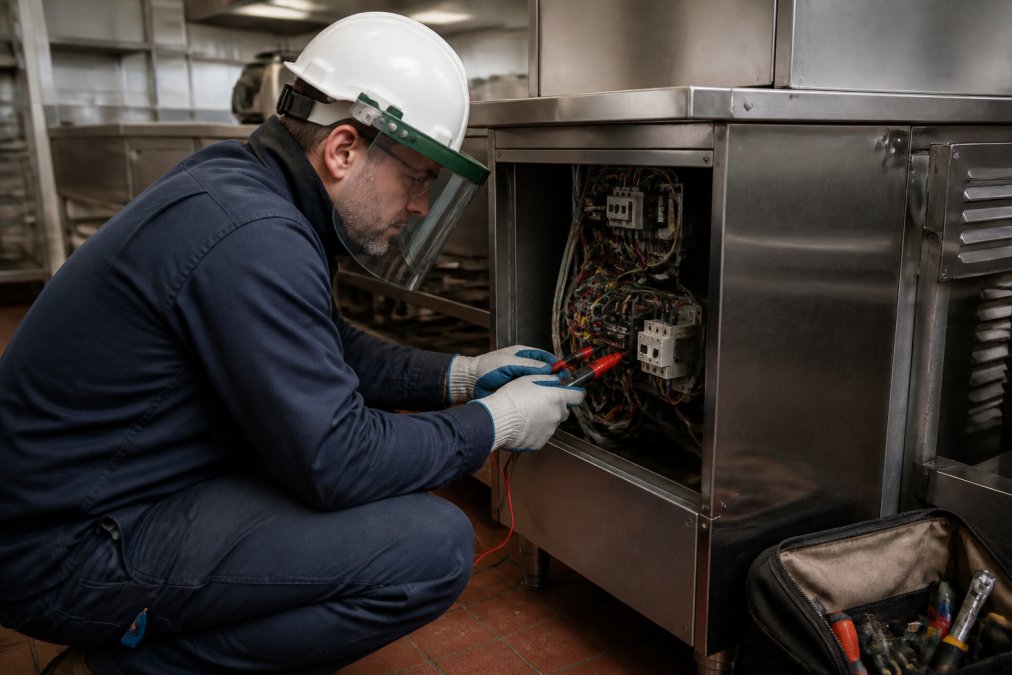
Professional technicians carry liability insurance, follow safety protocols, and know how to work with high-voltage and pressurized systems safely. They have the training to recognize hazards you might miss entirely.
3. Potential for Further Equipment Damage
Diagnosing commercial equipment problems requires specialized knowledge. A symptom like slow cooling or inconsistent grinding might stem from multiple root causes. Without proper diagnostic tools, you're guessing.
When you guess wrong, your attempted fix often makes things worse. Tightening a connection that wasn't the problem can damage threads. Replacing a component that wasn't faulty wastes money and creates new failure points. Adding refrigerant to a system with a leak doesn't fix the leak, it just masks the problem until the system fails again, potentially more catastrophically.
Each incorrect repair compounds the damage. What started as a $300 fix becomes a $2,000 replacement when you've damaged internal components trying to solve the wrong problem. Commercial equipment has tight tolerances and specialized components. One wrong move during maintenance creates cascading failures.
Professional technicians use diagnostic equipment to identify the actual problem before touching anything. They know what can and cannot be safely adjusted. They understand the mechanical stress points where incorrect work causes permanent damage.
4. Lack of Specialized Tools and Diagnostic Equipment
Commercial equipment requires specific tools and diagnostic devices that most businesses don't have on hand. A meat grinder needs specialized pullers to remove the head safely. Bread slicers and commercial fryers have proprietary adjustment tools.
Attempting repairs without the right tools leads to stripped bolts, bent components, and incomplete work. You might get the equipment partially operational, but without proper diagnostic equipment, you won't know if the repair is complete or if hidden problems remain.
Diagnostic equipment costs thousands of dollars. A refrigerant recovery machine, a digital multimeter rated for high voltage, a vacuum pump, and pressure gauges represent significant investment. Most small to medium operations can't justify buying this equipment for occasional use.
Professional service providers invest in these tools because they use them constantly. When you call a certified technician, you're not just paying for their time, you're accessing equipment and expertise that cost tens of thousands to acquire and maintain.
5. Complexity of Modern Commercial Systems
Modern commercial kitchen equipment and HVAC systems are far more complex than older models. They integrate computerized controls, multiple safety interlocks, and specialized components that interact in ways that aren't obvious.
A high-capacity grinder coordinates motor speed, blade position, and safety shutoffs.
Understanding how these systems interact requires technical training. Adjusting one component without understanding its effect on others creates problems that are hard to trace. The system might appear to work initially, then fail in unexpected ways under real operating conditions.
Technician certification programs exist specifically because this complexity demands formal education. A journeyman-certified technician has completed thousands of hours of training in system design, diagnostics, and repair. They understand not just how to fix something, but why the fix works and what side effects to watch for.
Cost of Commercial Equipment Downtime
When commercial equipment fails, your business stops. A deli cooler down during lunch rush costs money every minute it's not operating. A meat grinder out of service during peak processing hours creates bottlenecks throughout your operation. An HVAC failure in summer or winter can force temporary closure.
The revenue loss from downtime often exceeds the cost of professional repair by a significant margin. A restaurant losing lunch service for four hours loses more in sales than a professional repair would cost. A butcher shop unable to process orders loses customer trust and future business alongside immediate revenue.
DIY repairs typically take longer than professional service because you're learning as you work.
Emergency repair calls after a DIY failure attempt often cost more than scheduled professional service would have. You're paying premium rates for urgent response, and the technician arrives to find a partially disassembled system that needs additional troubleshooting.
6. Insurance Liability and Claim Denial
Your business insurance covers equipment damage and liability, but only if you follow proper maintenance protocols. Most commercial policies specifically require that equipment be serviced by certified technicians.
7. Compliance and Health Code Violations
Commercial kitchens operate under strict health and safety codes. Equipment maintenance is part of those requirements. Health inspectors verify that equipment is properly maintained, functioning safely, and documented accordingly.
Why Professional Service Matters
The seven risks above represent real costs that compound over time. A single failed DIY repair attempt might create warranty issues, equipment damage, and compliance problems simultaneously. What seemed like a money-saving decision becomes an expensive lesson.
Frequently Asked Questions
Can DIY repairs void manufacturer warranties on commercial equipment?
Yes. Most manufacturers explicitly void warranties when unauthorized personnel perform maintenance or repairs. Attempting DIY commercial equipment maintenance on a machine still under warranty will eliminate coverage, leaving you responsible for all future repair costs. Once a warranty is voided, the manufacturer will refuse to cover defects, parts failures, or system malfunctions, even if the original problem was unrelated to your repair attempt.
What are the safety risks of DIY appliance repair on commercial equipment?
Commercial kitchen equipment contains multiple hazards: electrical shock from live components and moving parts that can cause crushing injuries. Without proper lockout/tagout procedures and safety training, you risk electrocution, burns, or severe trauma. Professional technicians follow strict safety protocols and carry insurance; DIY work exposes you and your staff to liability if someone is injured.
How does improper equipment maintenance affect insurance coverage?
Insurance claims can be denied if an accident or equipment failure results from unauthorized maintenance. Insurers require proof that equipment was serviced by certified technicians following manufacturer specifications. A failed DIY repair that causes injury, property damage, or business interruption may result in claim denial, leaving your business to cover all costs, potentially thousands of dollars in liability exposure.
What is the difference between residential and commercial equipment maintenance?
Commercial equipment operates under much higher demand, with stricter regulatory standards and complex integrated systems. Commercial units require specialized diagnostic tools, professional certification, and documented maintenance records for health code compliance. Residential repair knowledge does not transfer; commercial systems involve electrical and mechanical components that demand industry-specific expertise and proper certification.
Why is professional maintenance required for commercial kitchen equipment?
Professional maintenance ensures equipment operates safely, meets health and safety regulations, maintains manufacturer warranties, and minimizes unexpected downtime. Certified technicians have the diagnostic tools, technical knowledge, and insurance to identify problems before they become costly failures. Preventative maintenance by professionals extends equipment life, improves operational efficiency, and protects your business from liability, compliance violations, and emergency repair costs.
Book Service with EESi Service today. Our journeyman-certified technicians deliver professional installation, maintenance, and repair across Central Alberta. We're committed to keeping your equipment running safely and efficiently, protecting your business from the risks that DIY maintenance creates. With over 20 years of industry experience, we understand commercial food service equipment inside and out. Let us handle the technical work so you can focus on running your operation.